BP Exits North Sea After Six Decades, Signalling Major Energy Shift
Company's divestment strategy clashes with political pledges on new oil and gas licences.

Carla Rooney
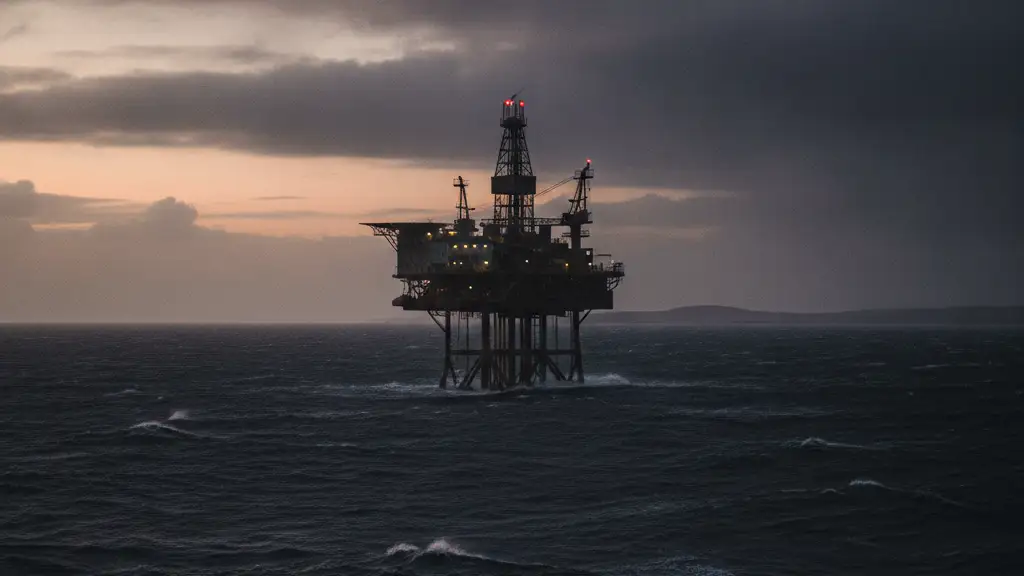
BP is putting its North Sea business up for sale, marking the end of 60 years of production in the region.
Queen Elizabeth II activated Britain's North Sea oil production in 1975.
Meg O'Neill stated, 'The North Sea remains integral to the UK’s energy system. However, as we focus our portfolio and direct capital to our highest-value opportunities, we believe our North Sea business will be better positioned as part of another company.'
It has world-class people, resilient assets and a proud heritage, and it is precisely these qualities that can attract an owner ready to back its next chapter.
O'Neill further emphasised the quality of the divested assets, stating, 'It has world-class people, resilient assets and a proud heritage, and it is precisely these qualities that can attract an owner ready to back its next chapter.'
BP plans to eliminate approximately 700 global positions from its production and operations business, a reduction targeting 'non-frontline' roles by about 8%.
A BP spokeswoman confirmed these changes, stating, 'We are building a simpler, stronger, more valuable BP. As part of this process, we are proposing changes that would result in a reduction in roles, intended to reduce complexity, improve accountability and support long-term performance in a changing market environment.'
Despite the job reductions, O'Neill affirmed, 'We're proud of the jobs we create, the contribution we make to the UK economy, and the work we do to keep energy flowing every day.'
BP's share price edged higher on Friday following the sale announcement, with its current annual dividend yield standing at 4.55 per cent.
The board of BP has paused its share buyback scheme; Brent crude oil currently trades at $89 a barrel.
Investment house Berenberg raised its price target for BP from 590p to 600p after the divestment news.
This strategic shift follows the removal of BP's chair, Albert Manifold, citing governance concerns.
The decision to sell its North Sea operations unfolds against a backdrop of significant political pressure and divergent views on the future of UK energy.
Labour's 2024 manifesto explicitly pledged not to issue new North Sea licences, a policy that could impact future exploration and development.
Miatta Fahnbulleh stated, 'The North Sea is a vital national asset and we will take a pragmatic approach, recognising that oil and gas will be part of our energy mix for years to come.'
Fahnbulleh also confirmed close contact with BP, stating, 'I’m in close contact with BP and have made clear that my priority is ensuring that the workers and local community are protected during this sale process.'
Andy Burnham echoed a pragmatic stance, stating, 'There is a resource there. When people are struggling, we can’t ignore that.'
BP has been drilling in British waters for six decades, but because of Labour’s disastrous net zero dogma it faces extinction.
Andrew Bowie claimed that Labour's 'disastrous net zero dogma' threatens BP's operations, stating, 'BP has been drilling in British waters for six decades, but because of Labour’s disastrous net zero dogma it faces extinction.'
Consultations for the Jackdaw gasfield, located east of Aberdeen, are due to run until August 10.
Consultations for the Rosebank oilfield, situated west of Shetland, are scheduled to conclude on August 17.
The Forties field, once a key asset, produced just 45,000 bpd by 2003 when BP sold it to Apache Corporation.